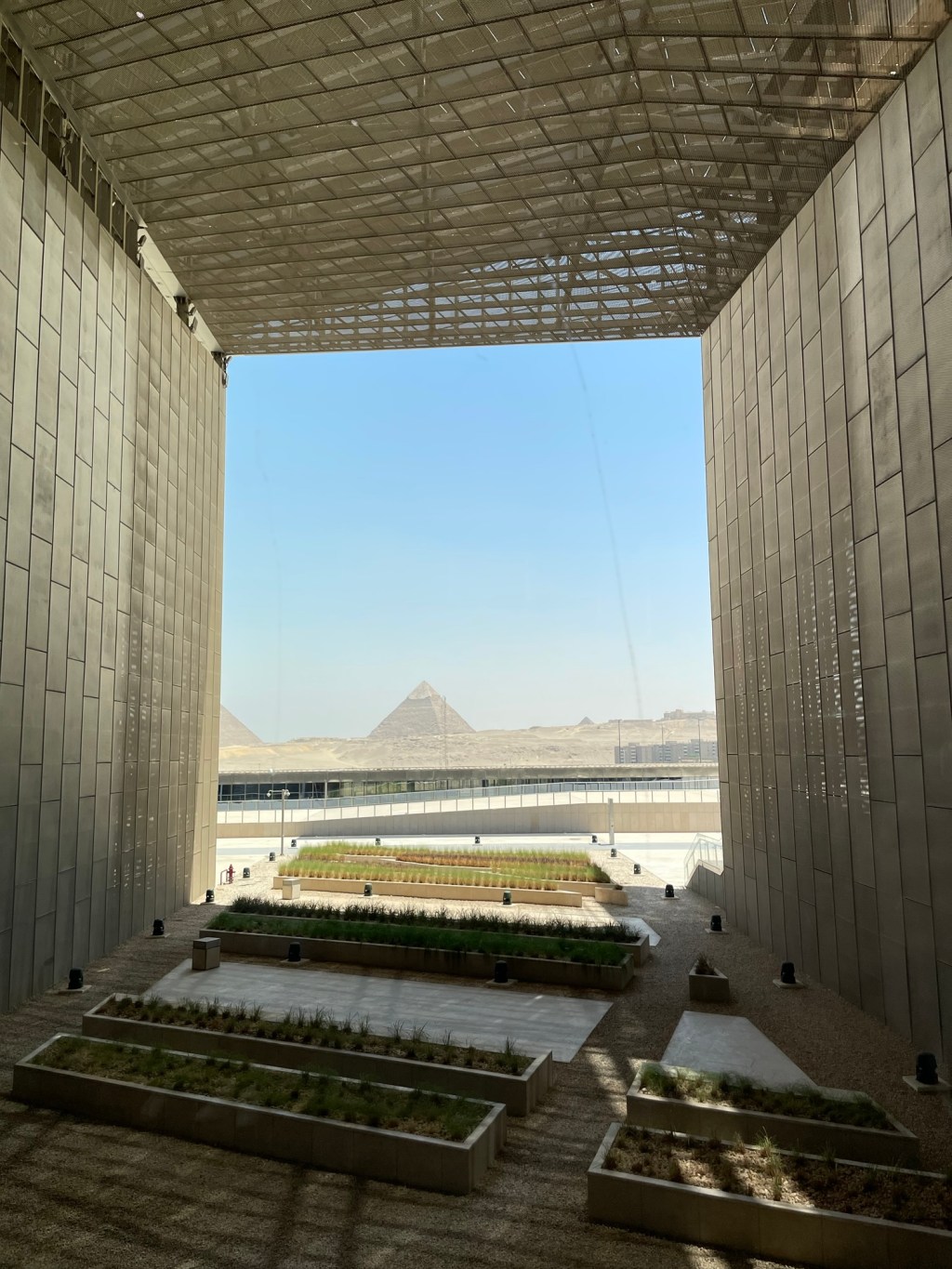
I had a chance to visit this museum as part of the last day of activities of UNICON’s director’s conference, which was hosted by the American University in Cairo in May 2025 and where I moderated a panel. The last day included a couple of sessions on topics like AI in executive development, but took place in a meeting room inside the museum right before a brief tour they organized as part of the agenda.
After doing some brief research about the museum before visiting it, I learned that it hosts archeological artifacts from thousands of years of human civilization in Egypt, spanning from the predynastic period to the Greco-Roman era (c. 3100 BCE to 400 CE). Its collection draws from a number of cultural institutions in Egypt, including the Egyptian Museum (founded in 1858) in downtown Cairo. The centerpiece of that museum’s collection is the cache of items discovered in the tomb of King Tutankhamun. Occupying a 120-acre (50-hectare) plot of land, the Grand Egyptian Museum (GEM) is defined as “the largest archaeological museum in the world”.
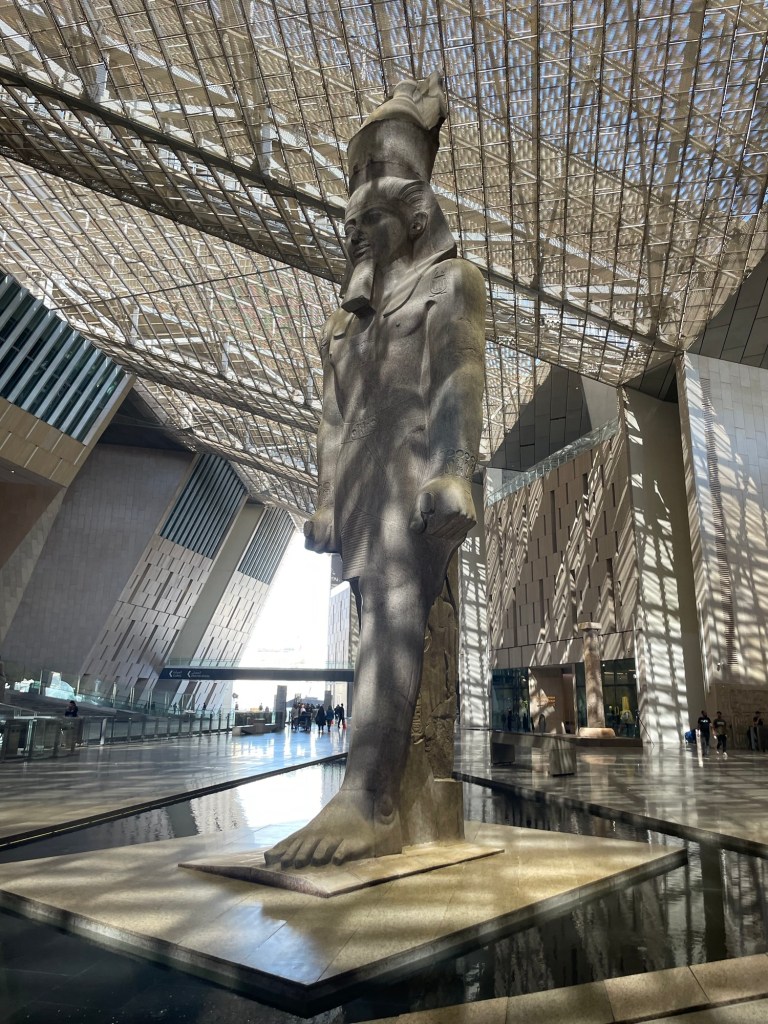
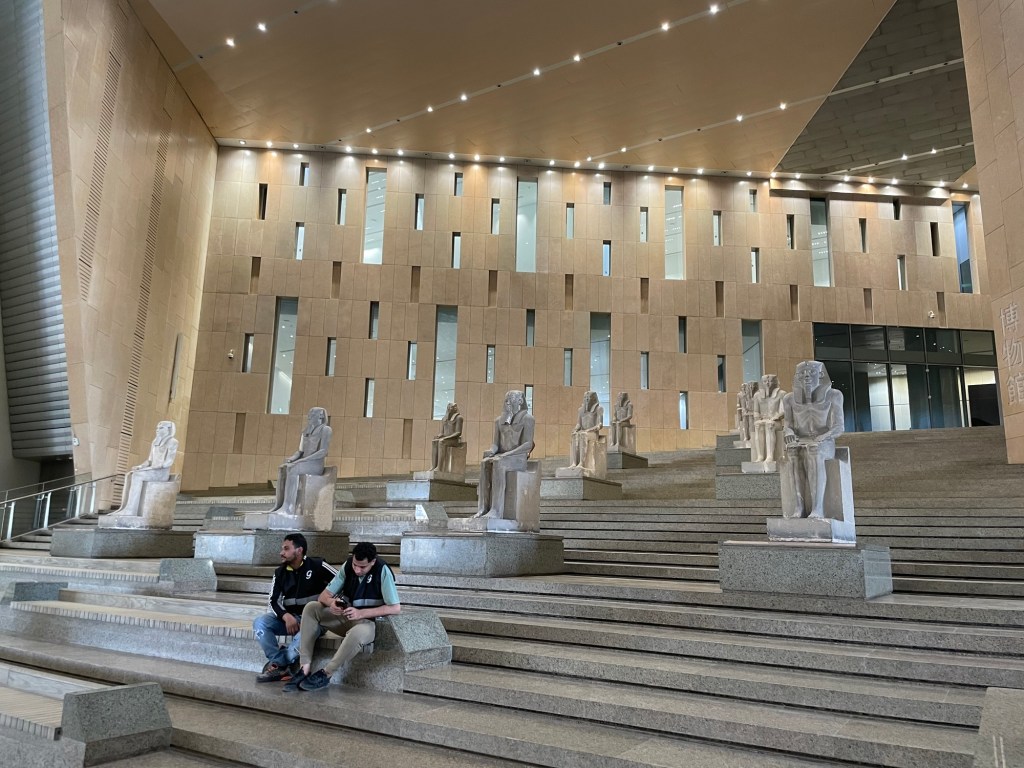
The scale of the building, the pattern of triangles on its facade, and the sloping ceilings of the interior echo the Pyramids of Giza, located 1.2 miles (2 km) to the southeast. Guests pass through an entrance covered with translucent alabaster panels and framed by hieroglyphs to reach the shaded atrium, where they are greeted by a 3,200-year-old colossal statue of Ramses II. They can then ascend a grand staircase, flanked with statues of deities and royalty, to reach the massive exhibition halls. The displays are divided by period and by such themes as religion, rulers, and society. Tall glass windows at the southeast end of the building offer unobstructed views of the pyramids. The nearly $1 billion complex also includes eight restaurants, a food court, restoration and conservation labs, outdoor gardens, a 3D movie theater, a conference center, and commercial space.
I also learned that, while the museum was under construction in the late 2010s, the Egyptian government began transferring tens of thousands of objects from the Egyptian Museum and elsewhere. These included a block statue of Queen Hetepheres, one of the earliest examples of its type; a black granite sculpture of Queen Nefertiti; a statue of King Senusret I; and a four-ton, pink granite sculpture of Amenhotep III, showing him seated next to the god Ra. The solar boat of King Khufu, previously shown near the Great Pyramid, was also moved to the GEM.
Egyptian officials and archaeologists hope that the GEM, with its permanent exhibition and conservation spaces, will provide leverage in their request for the return of the country’s looted cultural heritage. Plundered objects include the Rosetta Stone, which is currently housed in the British Museum, London; the bust of Nefertiti in the Neues Museum, Berlin; and the Zodiac of Dendera in the Louvre, Paris.
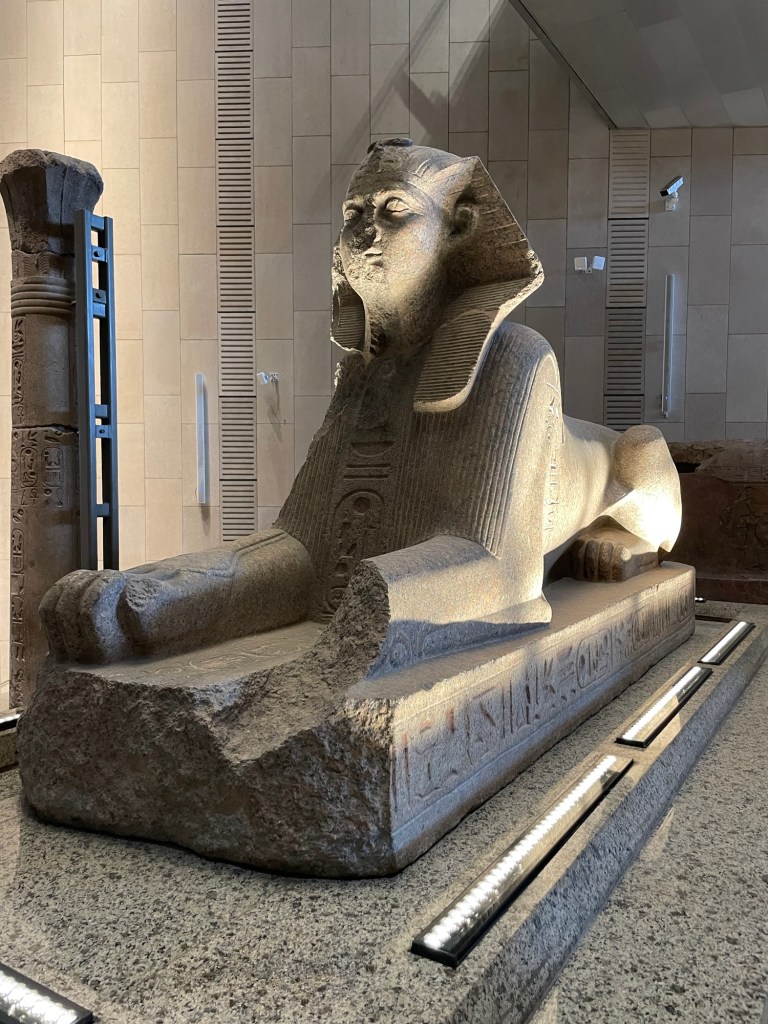
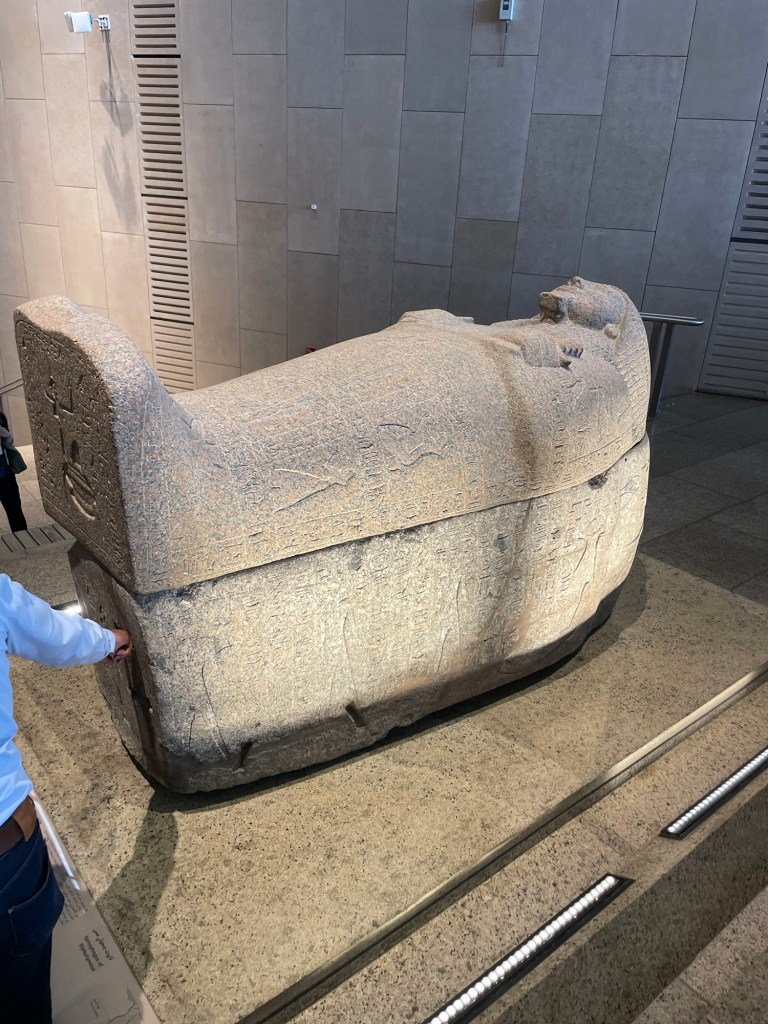
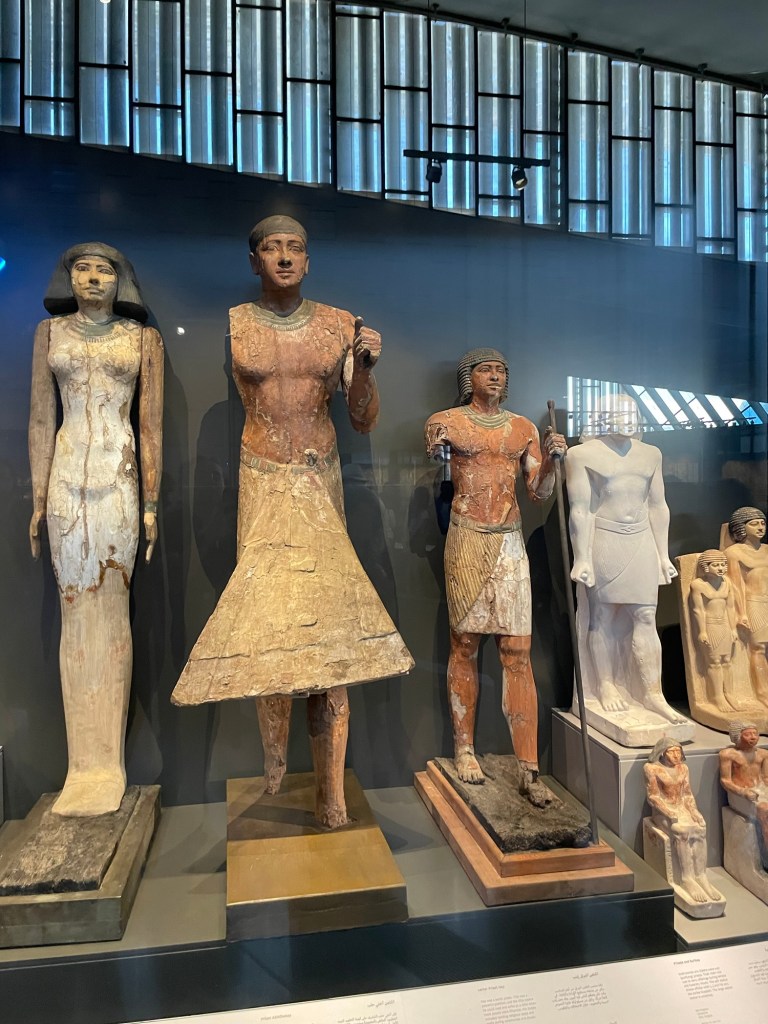
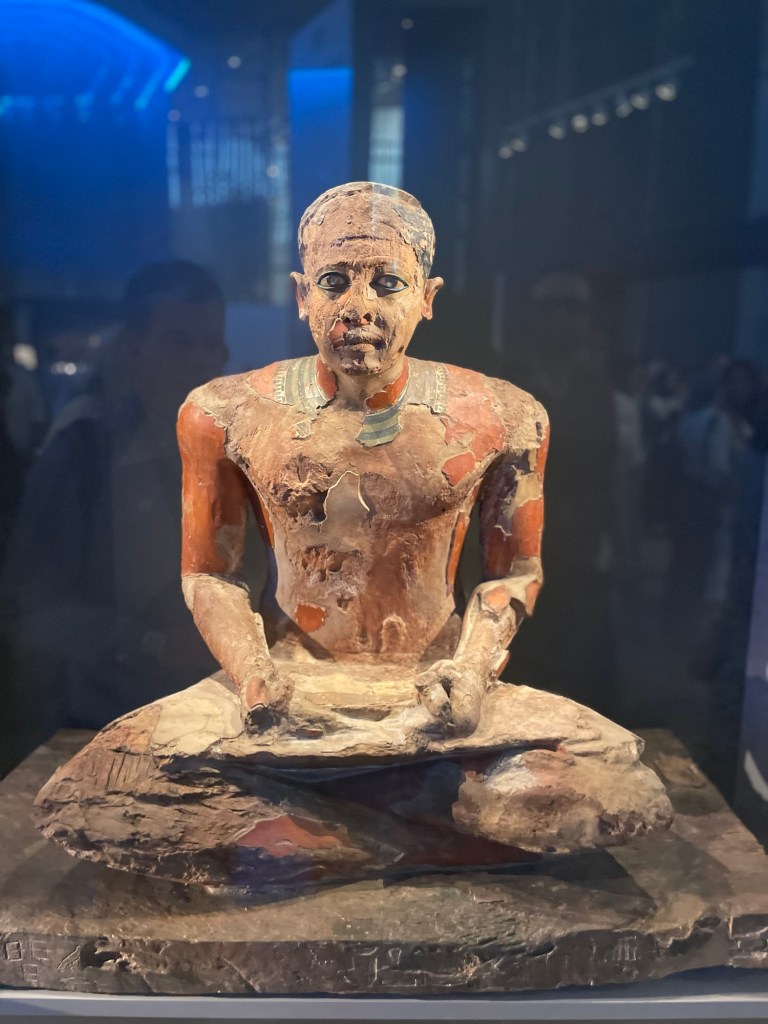
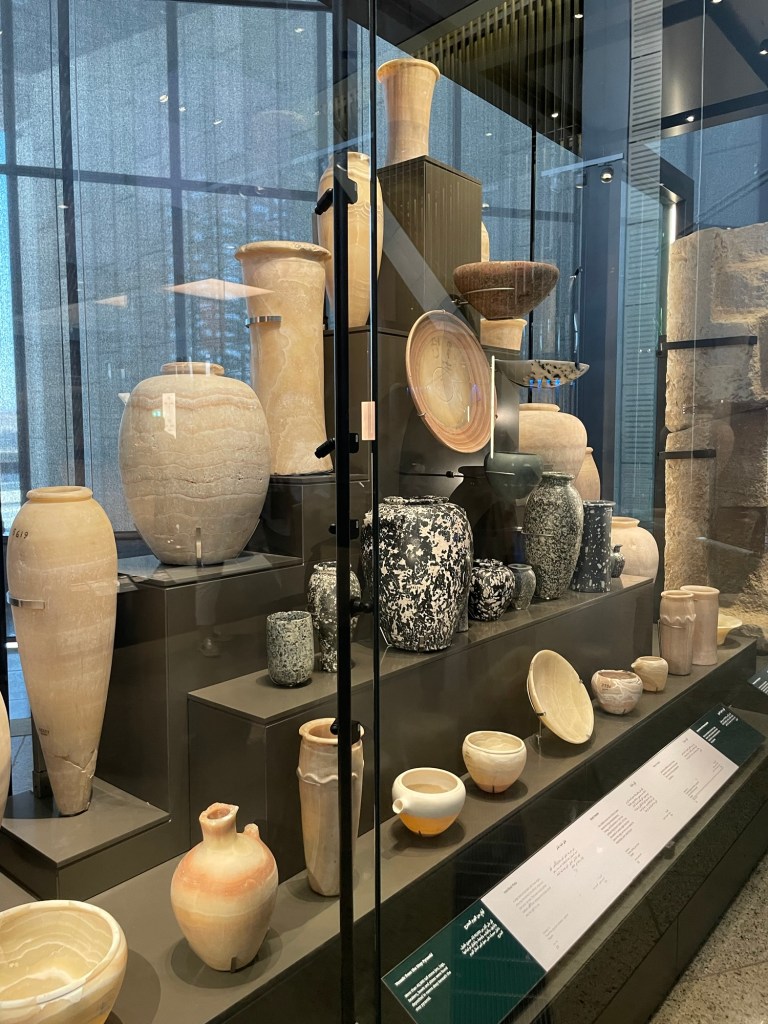
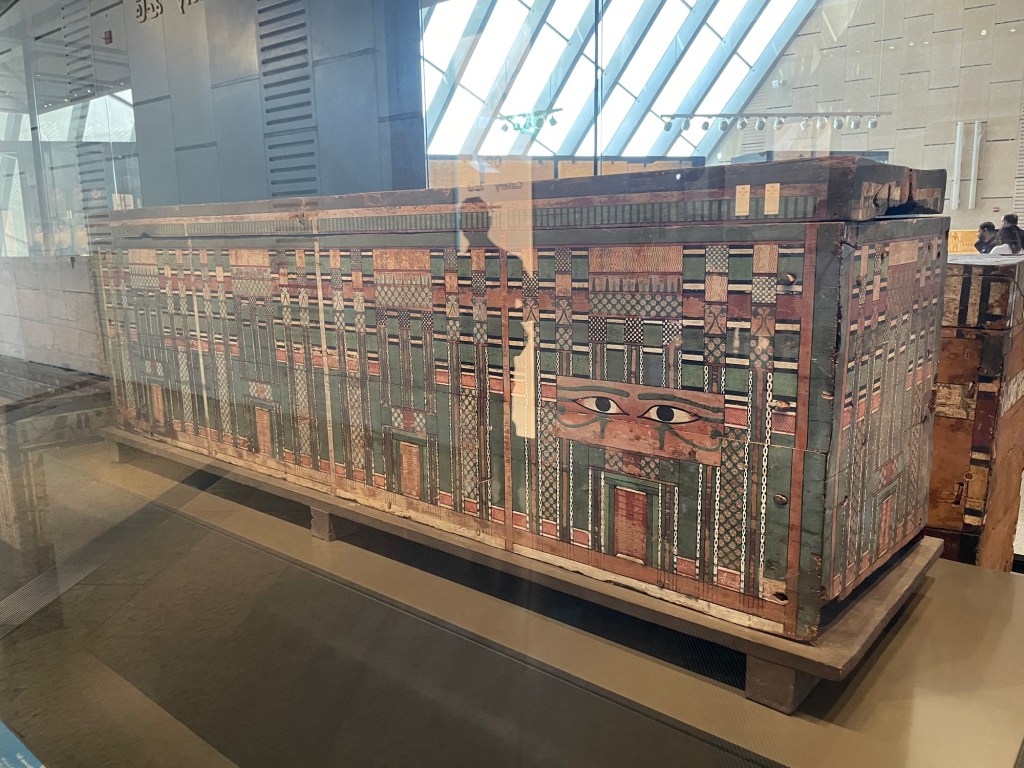
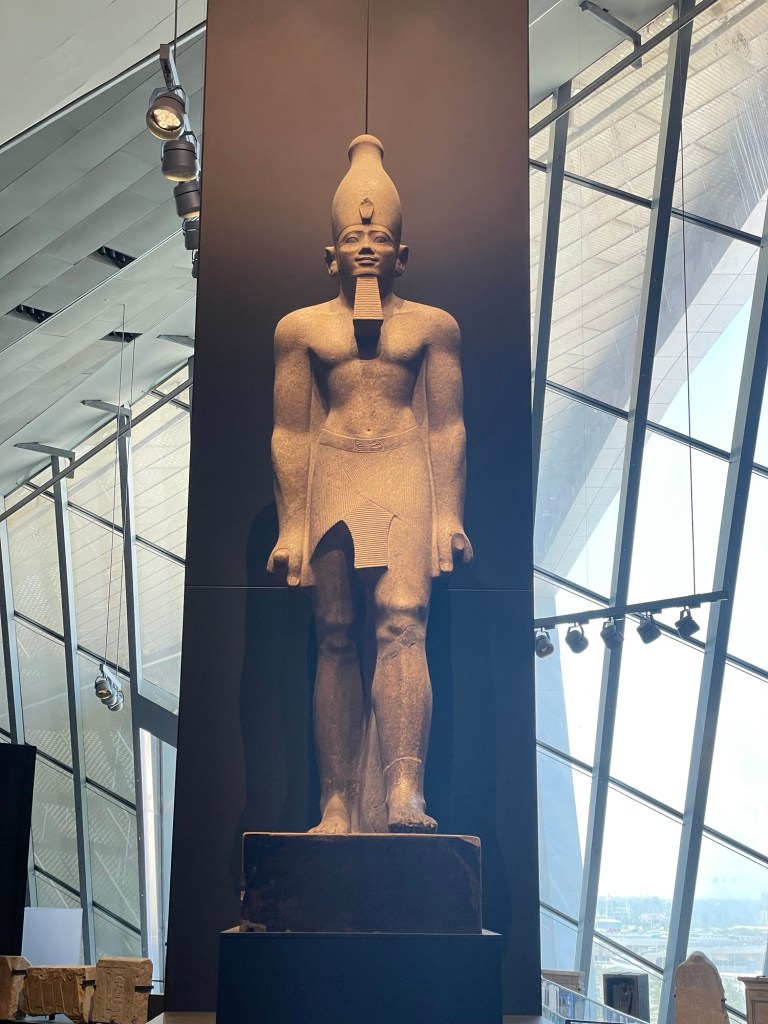
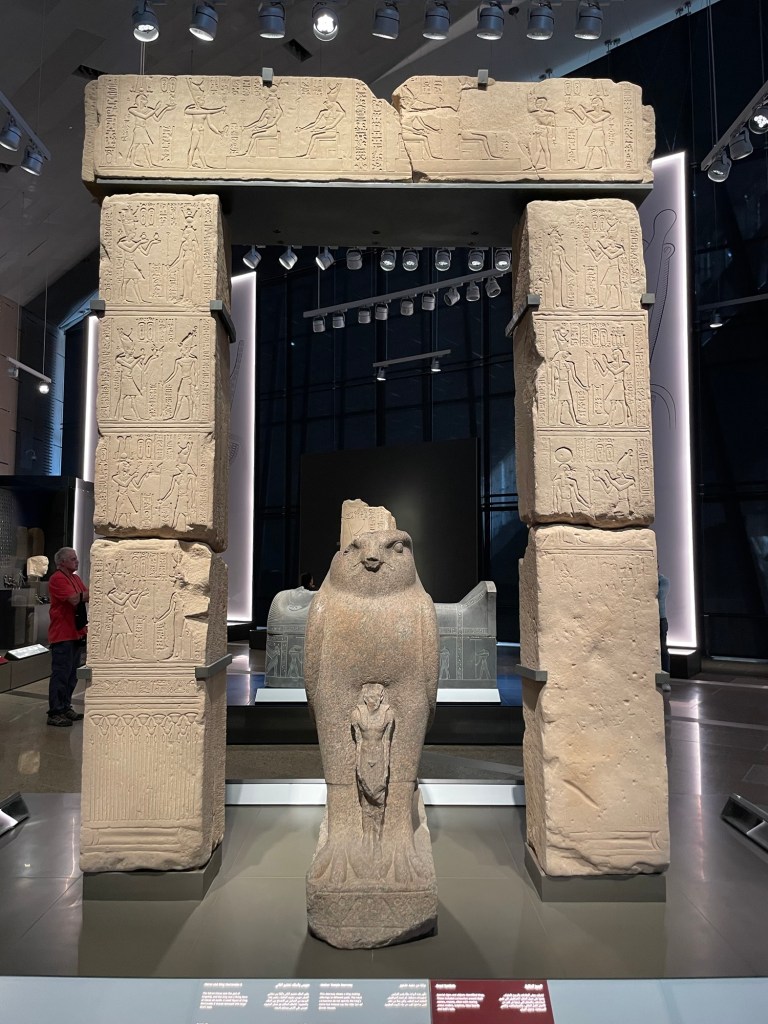
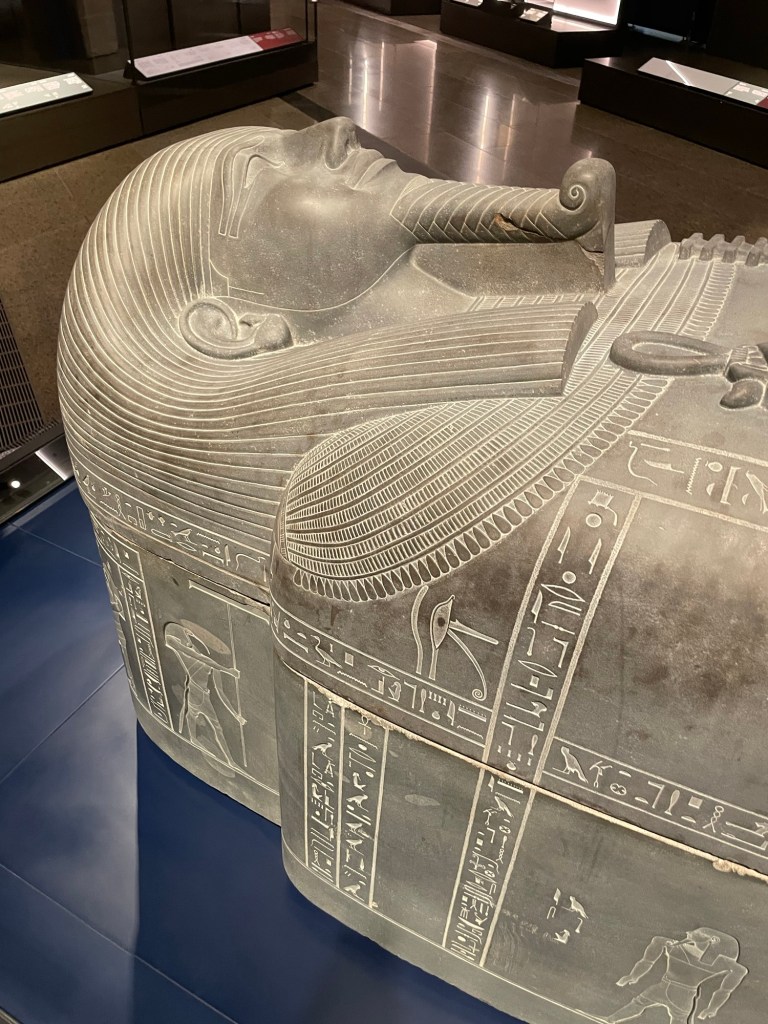
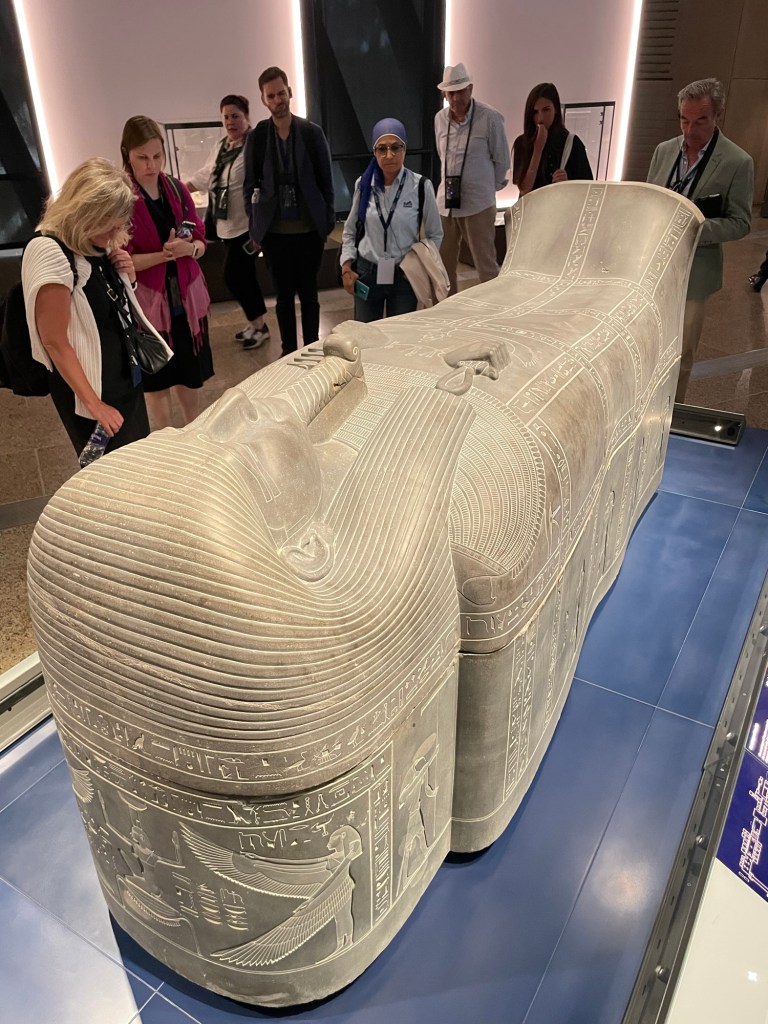
These are some photos I took out of the brief visit we made with other UNICON colleagues:








 Marco Serrato
Leave a comment